
Payables & Receivables
- Home
- Payables & Receivables
Payables & Receivables
Improve Control Over What You Owe and What You Are Owed
Prime Regent manages the customer and supplier side of your accounts: invoice recording, outstanding balance tracking, ageing analysis, statements, receipt and payment allocation, and ledger reconciliation. Profitable businesses still run into difficulty when collections slip or supplier obligations are not visible, so we keep both ledgers current and reported, giving you a working capital picture you can act on.
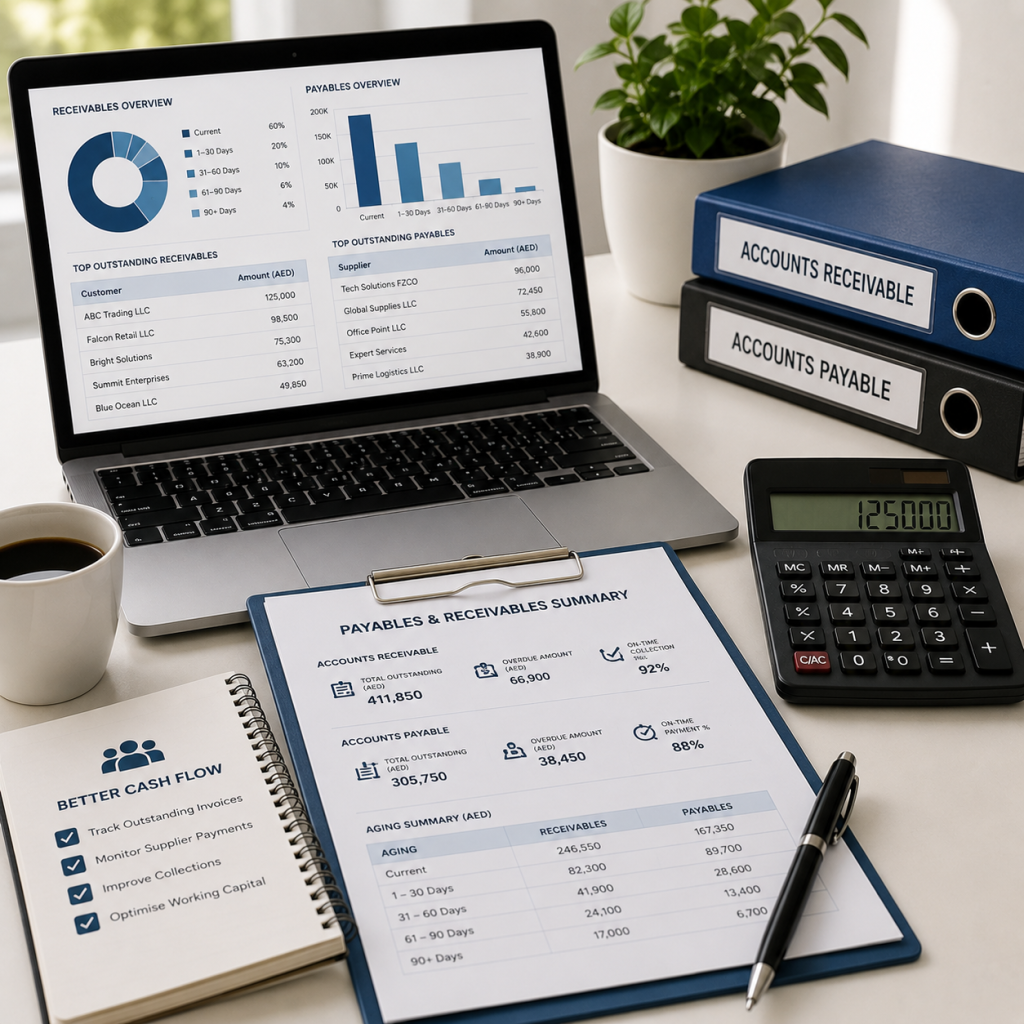
A sale is not complete until it is collected, and a cost is not managed until it is scheduled.
Prime Regent
Two Ledgers That Decide Your Cash Position
Accounts Receivable
On the receivable side we maintain the customer ledger, record sales invoices, track outstanding balances by customer, prepare ageing reports and customer statements, allocate receipts against the correct invoices and reconcile customer accounts where balances are disputed. The result is a clear answer to a question many businesses cannot answer quickly: who owes what, for how long, and what should be chased first.
Accounts Payable
On the payable side we maintain the supplier ledger, record purchase invoices, reconcile supplier statements against your records, prepare payment schedules and payables ageing, allocate payments and keep the supporting documentation organised. Knowing what falls due, and when, allows payments to be planned around actual collections rather than made reactively when a supplier calls.
How our payables and receivables support is structured:
| Area | Key Activities | Management Benefit |
|---|---|---|
| Customer Ledger | Invoice recording, receipt allocation, balance tracking | Accurate view of amounts due to you |
| Receivable Ageing | Grouping outstanding balances by age bracket | Collection effort goes where it matters |
| Supplier Ledger | Purchase invoice recording and statement reconciliation | Disputes surface early, not at year-end |
| Payment Planning | Preparing payment schedules and payables ageing | Obligations planned against real cash |
| Working Capital | Reporting both ledgers together each period | The cash gap becomes visible in advance |
- Customer ledger maintenance
- Sales invoice recording
- Outstanding balance tracking
- Receivable ageing reports
- Customer statements
- Receipt allocation
- Supplier ledger maintenance
- Purchase invoice recording
- Supplier statement reconciliation
- Payment schedule preparation
- Payables ageing and liability reports
- Payment documentation control
How We Work
Bringing Both Ledgers Under Control
Whether the ledgers are current or years out of date, the route is the same: establish what is genuinely outstanding, correct what is not, then keep both sides maintained on a regular cycle.
We review the existing customer and supplier ledgers to see what is genuinely outstanding, what has already been settled and which balances have been carried forward without support.
Unposted invoices, credit notes, receipts and payments are recorded and allocated against the correct documents, so each account reflects real activity rather than a running total.
Customer accounts and supplier statements are reconciled against your records, and differences are listed for discussion with the relevant party rather than written off quietly.
Receivable and payable ageing reports, customer statements and payment schedules are prepared so collection priorities and upcoming obligations are both visible.
The cycle is maintained each period, with updated ageing and working capital reporting so the position never drifts back out of control.
FAQ
Receivables & Payables Questions Answered
Common questions about managing customer collections, supplier obligations and the ledgers that sit behind your working capital position.
It is the process of keeping track of everything customers owe your business and making that information usable. In practice it covers recording sales invoices, maintaining a ledger per customer, allocating receipts against the correct invoices, producing ageing reports and issuing statements. The purpose is not only accuracy in the accounts but knowing which balances need attention and when.
The same discipline applied to what your business owes. Purchase invoices are recorded against the correct supplier account, payments are allocated, supplier statements are reconciled to your ledger and payment schedules are prepared. It gives you a reliable view of upcoming obligations so payment decisions can be planned against expected collections rather than made under pressure.
Yes, for both ledgers. Ageing reports group outstanding balances into brackets such as current, thirty, sixty, ninety days and beyond, by customer or supplier. Reviewed monthly, they show which accounts are drifting, whether collection terms are being respected in practice, and how much of your reported profit is still sitting in unpaid invoices.
Yes. We match supplier statements against the purchase ledger line by line, identify invoices recorded on one side but not the other, duplicated entries, unallocated payments and pricing differences, then prepare a reconciliation showing exactly where the gap sits. That gives you a documented position to discuss with the supplier instead of an unexplained difference.
It usually should be. Both ledgers form part of the ordinary bookkeeping cycle, so handling them together avoids duplicated effort and keeps the control accounts agreeing to the general ledger. Most clients include receivables and payables within a monthly accounting arrangement, with ageing analysis delivered as part of the standard reporting pack.