
Bank Reconciliation
- Home
- Bank Reconciliation
Bank Reconciliation
Bring Your Financial Records Back Into Balance
Prime Regent reconciles bank, cash and card transactions and brings accounting records back up to date where they have fallen behind. Missing entries, duplicated postings, unallocated receipts and ledger balances that no longer agree are identified, corrected and documented. If your books are months or years behind, this is where the recovery work starts.
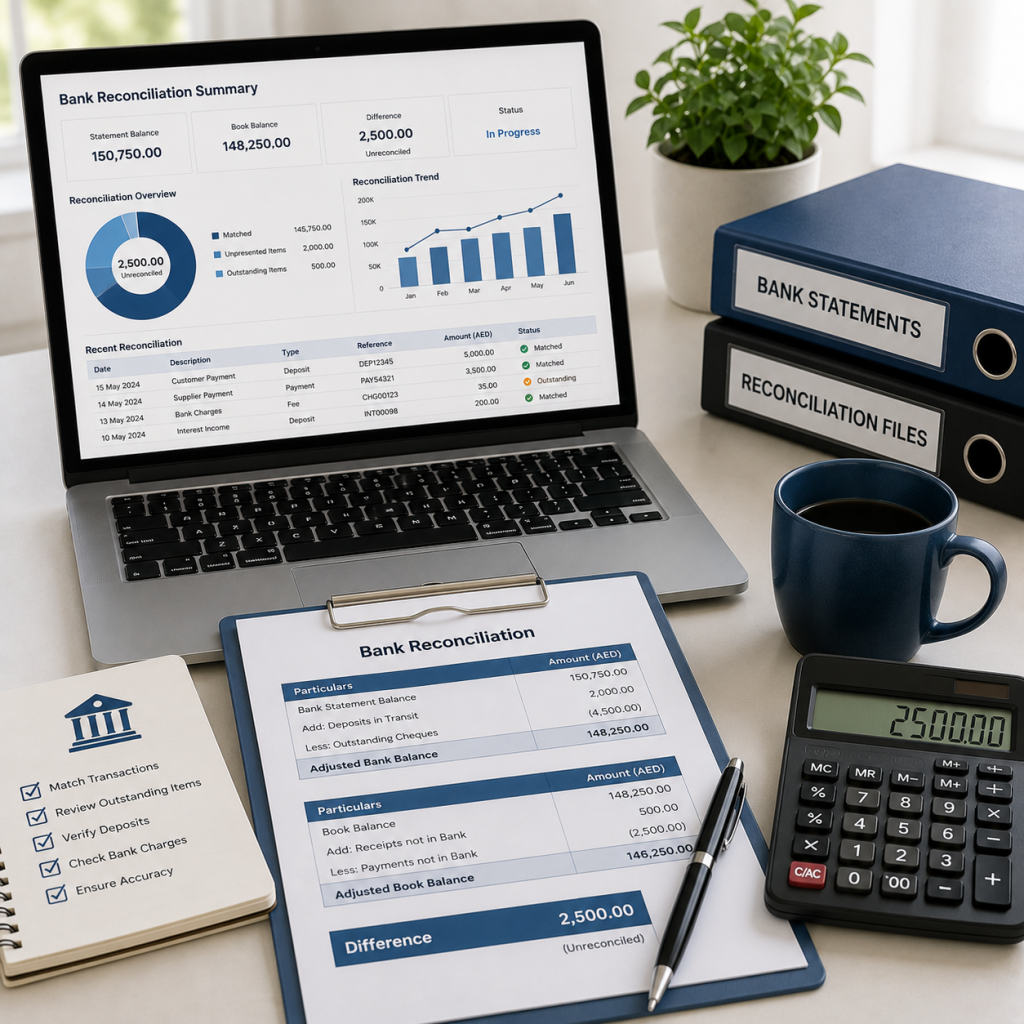
Books that no longer agree with the bank cannot answer a single useful question about the business.
Prime Regent
Reconciliation and Catch-Up Accounting
Accounting records fall behind for ordinary reasons. A bookkeeper leaves, a busy trading period takes priority, a software change goes half-finished, or transactions were simply posted without anyone matching them back to the bank. However it happened, the effect is the same: reported balances stop reflecting reality, VAT and Corporate Tax work becomes guesswork, and nobody trusts the figures enough to make decisions with them.
Prime Regent handles both sides of the fix. Reconciliation covers bank, cash and credit card accounts, along with customer and supplier balances, so every movement is matched or explained. Catch-up accounting rebuilds the missing periods in sequence, correcting duplicates, posting missing entries, reviewing opening balances and closing each period properly before moving to the next. You end with records that reconcile and a clear statement of what was corrected.
Common problems and how we approach them:
| Issue | Our Approach | Result |
|---|---|---|
| Unreconciled Bank Accounts | Matching every statement line against the ledger, period by period | Book balance agrees to the bank |
| Missing Entries | Tracing unrecorded transactions back to source documents | Complete transaction history |
| Duplicate Postings | Identifying and reversing repeated entries with documentation | Costs and revenue stated once |
| Unallocated Transactions | Allocating receipts and payments to the correct invoices | Ledgers that can be relied on |
| Accounting Backlog | Rebuilding periods in sequence and closing each one | Books brought up to date |
- Bank account reconciliation
- Credit card reconciliation
- Cash account reconciliation
- Missing transaction identification
- Duplicate entry correction
- Unallocated receipt and payment clearing
- Historical and backlog bookkeeping
- Customer balance reconciliation
- Supplier balance reconciliation
- Ledger correction and clean-up
- Opening balance review
- Period closing assistance
How We Work
Our Catch-Up Process
Recovery work is done in sequence rather than all at once. Each period is completed and closed before the next begins, so corrections carry forward properly instead of creating new differences.
We establish how far the records are behind, which accounts are affected and which documents are available, then set out a realistic scope and timeline before work begins.
Bank statements, card statements, invoices, receipts and any existing ledgers or software files are collected for every period that needs to be rebuilt.
Missing transactions are posted, duplicates reversed and misclassified entries corrected, working through the periods in order so each closing balance supports the next opening balance.
Bank, cash, card, customer and supplier accounts are reconciled, and any remaining differences are listed and explained rather than absorbed into a suspense account.
You receive updated reports and a summary of what was corrected. From there the accounts can move onto a regular monthly cycle so the same situation does not recur.
FAQ
Reconciliation Questions Answered
What businesses usually ask before starting reconciliation or catch-up work, particularly when the accounts have been neglected for some time.
Because the bank statement is independent evidence. Reconciliation is what confirms that recorded transactions actually happened, that nothing has been missed and that the cash figure in your accounts is real. Without it, errors and omissions accumulate quietly, and every report built on those balances inherits the problem, including VAT returns and year-end accounts.
Yes. Backlogs of several months or several years are ordinary work for us. We first assess the volume and the condition of the available records, then agree a realistic scope and sequence. Periods are rebuilt in order and closed one at a time, which takes longer than working on everything simultaneously but produces balances that actually carry forward correctly.
Bank and credit card statements for the full period, sales and purchase invoices, receipts and payment vouchers, any existing accounting file or spreadsheets, and details of loans, leases or related-party arrangements. Where documents are incomplete, we tell you what is missing and what can reasonably be reconstructed from other sources rather than inventing entries.
Yes, and both are common in neglected books. Duplicates are traced to their source, reversed and documented so the correction can be followed later. Missing entries are posted with reference to the underlying document. Every adjustment is recorded with an explanation, which matters if the accounts are later reviewed by an auditor, a bank or a tax authority.
You receive reconciled accounts, updated financial reports and a summary of the corrections made. At that point most clients move to a monthly bookkeeping arrangement so the records stay current, and use the restored figures to address outstanding VAT or Corporate Tax matters from a position where the underlying numbers can be supported.